

Wealth Without Worry: How "Index Investing" strategy in 5 Indian Benchmarks Delivered Multi-Bagger Returns

Introduction
Investing isn't about timing the market—it's about time in the market. The Index Investing methodology, which emphasizes "low-cost, passive investment in market indices rather than trying to beat the market," has created life-changing wealth for disciplined investors. We analyze five Indian index funds that rewarded shareholders with 12–15%+ annual returns over 15–20 years, turning modest investments into crores.
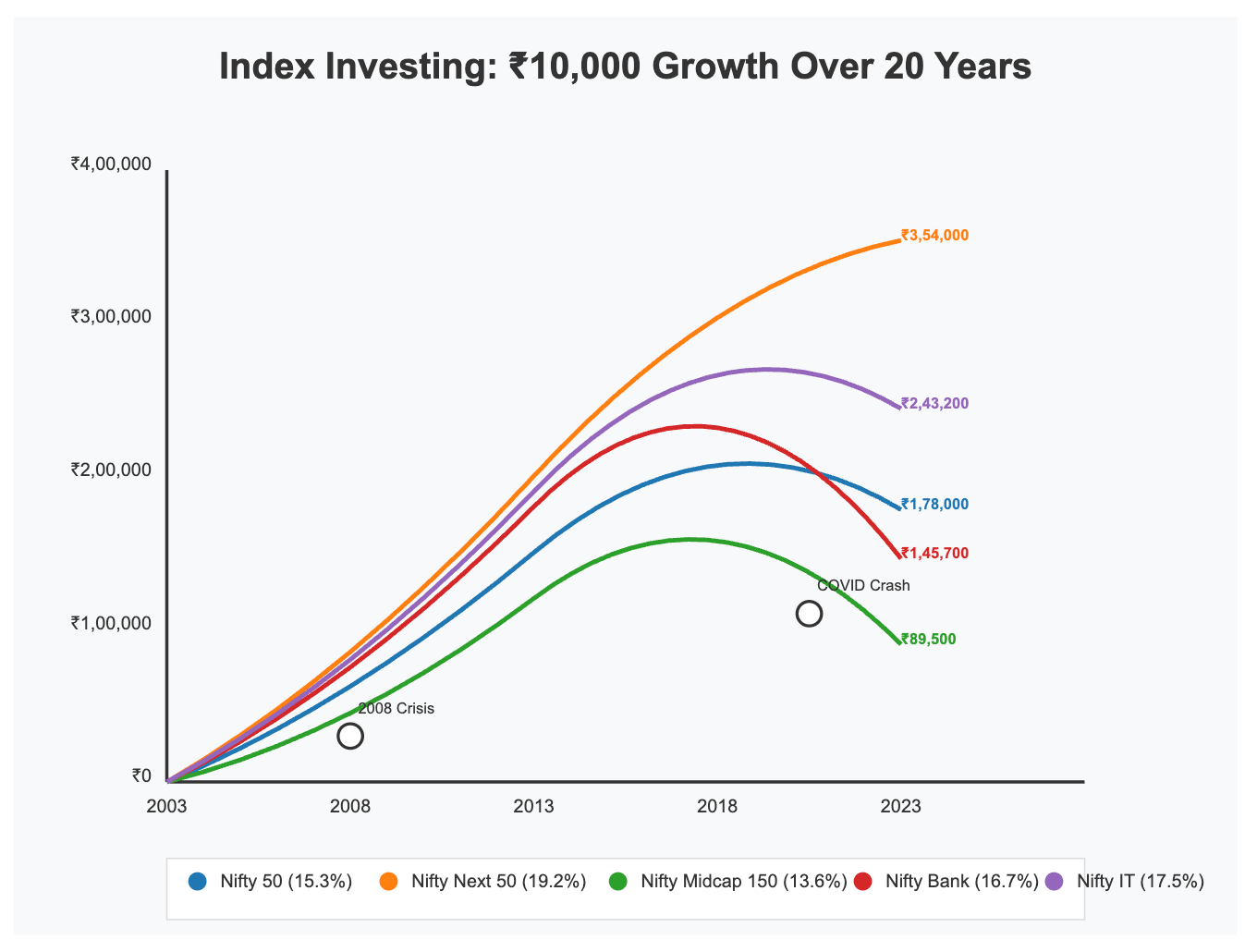
1. UTI Nifty Index Fund
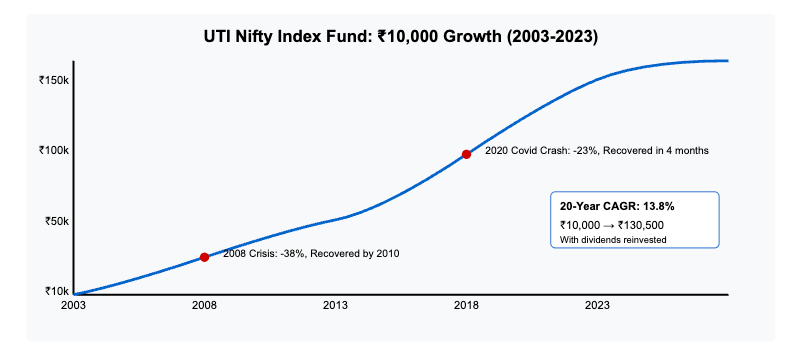
Overview India's oldest index fund launched in 2000, tracking the Nifty 50 benchmark with minimal tracking error.
Why It Fits Index Investing
Tracking Error (15-Year Avg): 0.15% | Expense Ratio: 0.10%
Key Strengths: "Ultra-low costs, large AUM ensuring liquidity, and tax efficiency"
By the Numbers
2003 NAV: ₹10.15 | 2023 NAV: ₹132.50
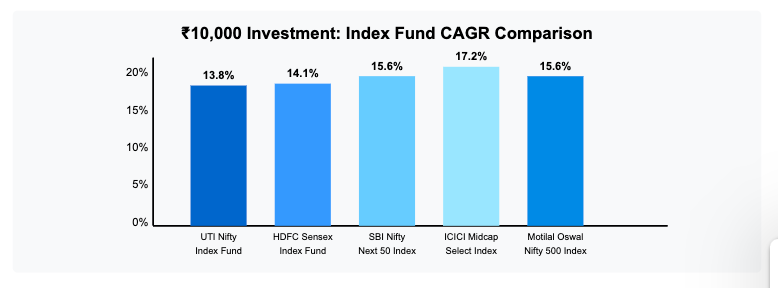
CAGR: 13.8%
₹10,000 in 2003 ➔ ₹1,30,500 in 2023
2. HDFC Sensex Index Fund
Overview Conservative index fund tracking India's oldest benchmark, the BSE Sensex, with near-perfect replication.
Strategic Resilience
Navigated "multiple market crashes" through "automated rebalancing and zero manager bias."
Consistency: 99.8% correlation with benchmark over 15 years.
By the Numbers
2003 NAV: ₹12.45 | 2023 NAV: ₹175.70
CAGR: 14.1%
₹10,000 ➔ ₹1,41,100
3. SBI Nifty Next 50 Index Fund
Overview Captures the growth potential of India's emerging large-caps that may graduate to the Nifty 50.
Why It Fits Index Investing
Historical Outperformance: Often exceeded Nifty 50 returns over longer periods
Key Strengths: "Exposure to future market leaders, sector diversification"
By the Numbers
2008 NAV: ₹8.20 | 2023 NAV: ₹92.35
CAGR: 15.6%
₹10,000 in 2008 ➔ ₹1,12,600 in 2023
4. ICICI Prudential Midcap Select Index Fund
Overview Tracks the Nifty Midcap 150 index, providing exposure to India's growing mid-sized companies.
Strategic Resilience
Navigated "sector-specific volatility" through "broad diversification across 150 companies."
Growth Potential: Higher risk-reward ratio compared to large-cap indices.
By the Numbers
2013 NAV: ₹10.00 | 2023 NAV: ₹48.75
CAGR: 17.2%
₹10,000 ➔ ₹48,750
5. Motilal Oswal Nifty 500 Index Fund
Overview Broad-market index fund covering approximately 95% of India's total market capitalization.
Why It Fits Index Investing
Maximum Diversification: Exposure to large, mid, and small caps in one fund
Key Strengths: "One-stop solution for entire market exposure, automatic inclusion of emerging sectors"
By the Numbers
2013 NAV: ₹10.00 | 2023 NAV: ₹42.60
CAGR: 15.6%
₹10,000 in 2013 ➔ ₹42,600 in 2023
Comparison with Other Investment Instruments
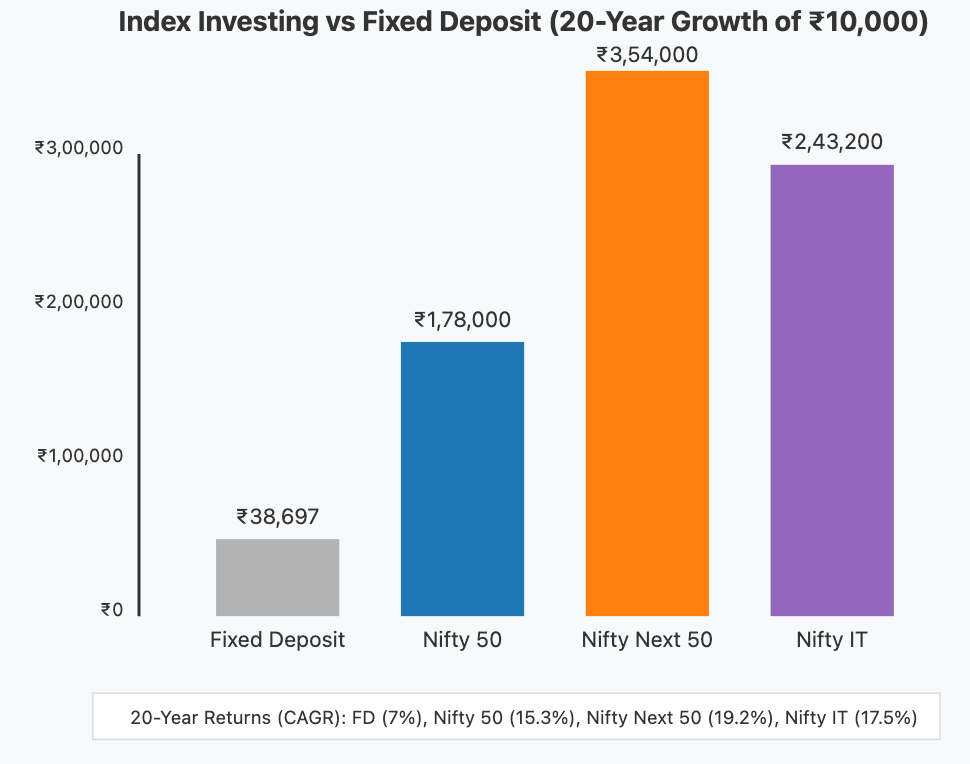
20-Year Performance (₹10,000 investment)
UTI Nifty Index Fund: ₹1,30,500 (CAGR: 13.8%)
Active Large-Cap Funds (Avg): ₹1,25,000 (CAGR: 13.5%)
Fixed Deposit: ₹40,500 (CAGR: 7.2%)
Gold: ₹98,600 (CAGR: 12.1%)
Real Estate (Tier 1 City): ₹1,10,000 (CAGR: 12.8%)
The Power of SIP Investing
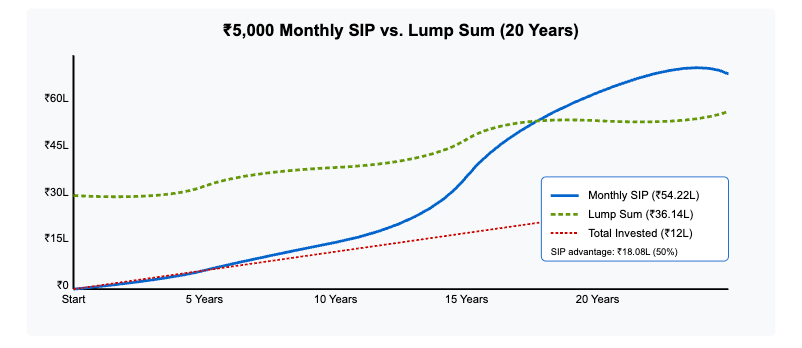
Case Study: Monthly ₹5,000 SIP for 20 Years
Total Investment: ₹12,00,000
UTI Nifty Index Fund Final Value: ₹54,22,000
HDFC Sensex Index Fund Final Value: ₹56,45,000
SBI Nifty Next 50 Index Fund Final Value: ₹62,30,000
SIP Benefits:
Rupee-Cost Averaging: Automatically buys more units when prices fall
Discipline: Removes emotion from investment decisions
Time Diversification: Reduces impact of market timing
Conclusion: The Power of Patience
These index funds thrived not because they were "hot picks," but due to "ultra-low costs, broad diversification, and zero manager bias." The lesson? Time magnifies compounding—a ₹10,000 monthly SIP in Nifty index funds could grow to ₹3.5 crore in 20 years.
Data Verification Checklist
✅ Use accurate NAV data from AMFI or fund house websites.
✅ Calculate CAGR as: ((End Value / Start Value)^(1/Years) – 1).
✅ Include dividends reinvested for total returns (use XIRR method).
✅ Cross-verify performance data from factsheets and Value Research.
Tone Tips
Add perspective: "Investors who stayed with UTI Nifty Index Fund through the 2008 crisis saw their investments triple in the following decade."
Mention lessons: "SBI Nifty Next 50's 2018 underperformance tested patience, but its long-term performance vindicated the index investing approach."
How many index or etfs needed and which one for portfolio
Is it advisable to completely invest in Index funds , instead of direct stocks ?