How to Start Investing in Mutual Funds & Stocks as a Fresher
Your Step-by-Step Guide to Building Wealth from Day One

Dear Wealth Warriors,
If you've just started earning and find yourself unsure about what to do with your money beyond basic savings, you're in the right place. Today, we're breaking down how to start investing in mutual funds and stocks—even if you're completely new to the investing world.
Why Investing Matters (Beyond Just Saving)
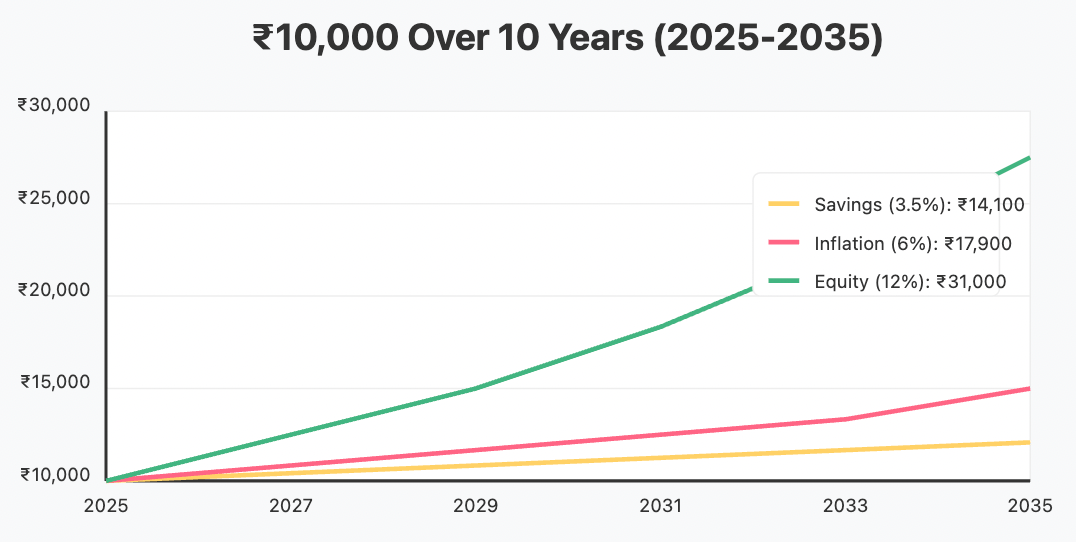
Saving money is good, but investing is better. Here's why:
The Inflation Challenge: If you're keeping ₹10,000 in a savings account today, in ten years it won't buy you what ₹10,000 buys today. With India's average inflation rate of 5-6%, what costs ₹10,000 now might cost nearly ₹18,000 by 2035.
Money Working for You: Think of investing as giving your money a job. While you're busy coding, designing, or managing projects, your money should be growing on its own. That's the power of investing.
A simple comparison:
₹5,000/month in a savings account (3.5%) for 10 years = ₹7.05 lakhs
₹5,000/month in equity funds (average 12%) for 10 years = ₹11.6 lakhs
The difference? Over ₹4.5 lakhs—without you working any harder.
Mutual Funds: The Perfect Starting Point
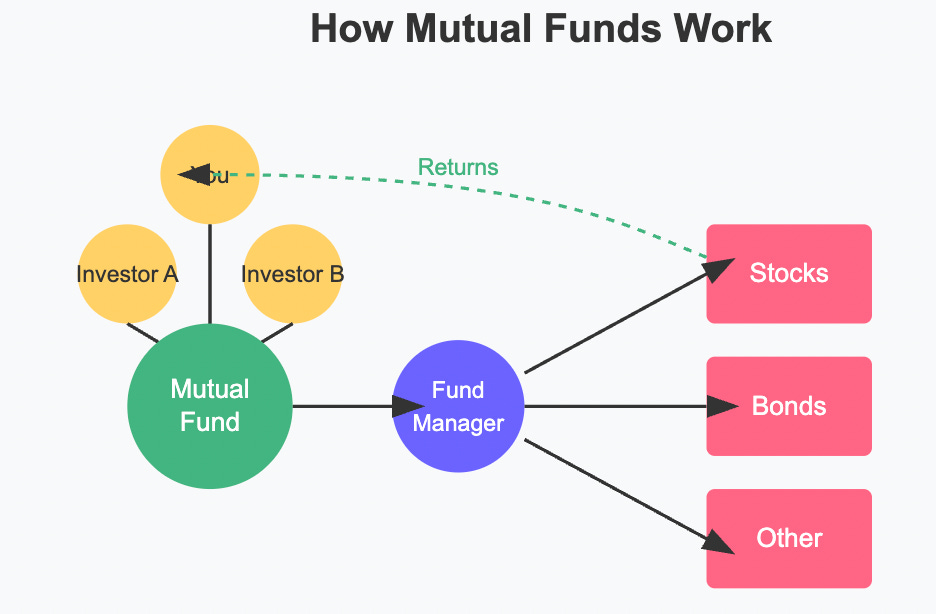
For beginners, mutual funds offer the perfect entry point into the world of investing. Here's why:
Simplicity: You don't need to analyze individual companies or track daily market movements. Professional fund managers do the heavy lifting for you.
Diversification: Your money gets spread across multiple stocks or bonds, reducing risk compared to buying individual stocks.
Affordability: You can start with as little as ₹500 per month through Systematic Investment Plans (SIPs). It's like setting up an EMI, but instead of paying off debt, you're building wealth.
Types of Mutual Funds to Consider:
Equity Mutual Funds – Invest primarily in stocks, offering higher returns over long periods. Ideal for goals that are 7+ years away.
Hybrid Funds – A mix of stocks and debt instruments, offering moderate returns with lower risk. Great for goals 3-7 years away.
ELSS (Equity Linked Savings Scheme) – These offer tax benefits under Section 80C while also delivering equity-like returns. The mandatory 3-year lock-in actually helps you avoid premature withdrawals.
For fresh graduates, I recommend starting with:
A large-cap or index fund SIP (lower risk, consistent returns)
An ELSS fund for tax-saving benefits
Direct Stocks: The Next Level
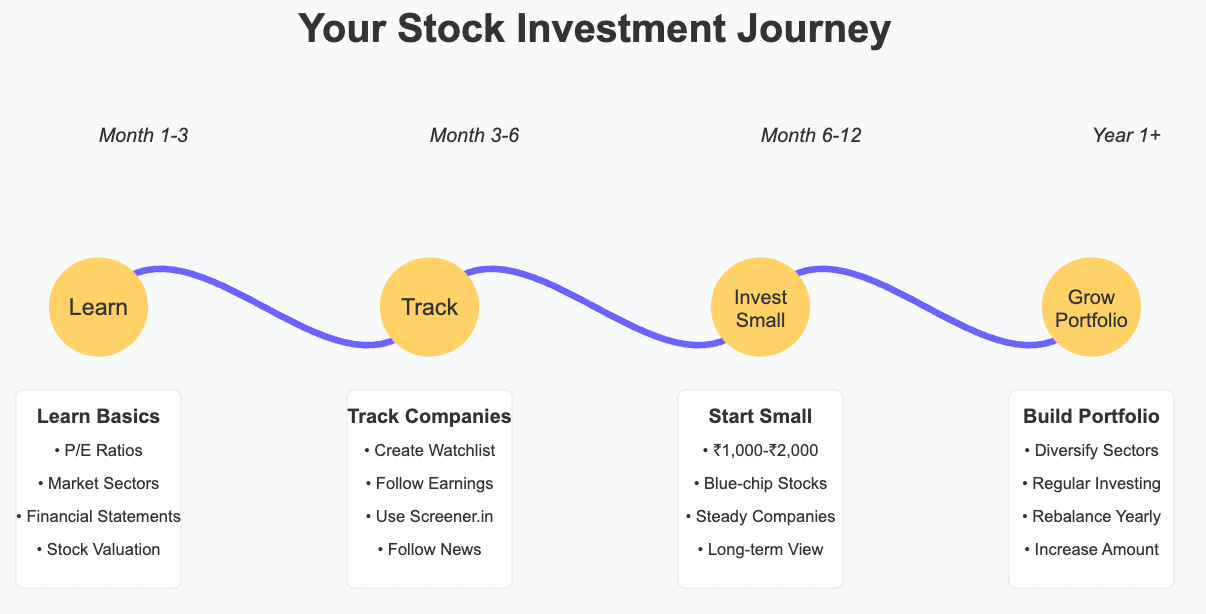
Once you're comfortable with mutual funds, you might want to try direct stock investing. But approach this with caution—individual stocks carry higher risk and require more research.
The Smart Approach to Stocks:
Learn First: Before buying any stock, spend time understanding basics like:
What P/E ratio means
How to read a company's financial statements
Industry trends and company positioning
Track Before Buying: Follow companies you're interested in for at least 3-6 months. Create a watchlist on platforms like Moneycontrol or Screener.in.
Start Small: Begin with ₹1,000-₹2,000 in established blue-chip companies like TCS, HDFC Bank, or Asian Paints. These companies have proven track records.
Avoid the Hype: Don't buy stocks based on hot tips from Instagram reels, WhatsApp forwards, or "guaranteed multibagger" recommendations from friends.
The key rule: Only invest in direct stocks with money you don't need for at least 5 years, and never more than 20% of your total investments as a beginner.
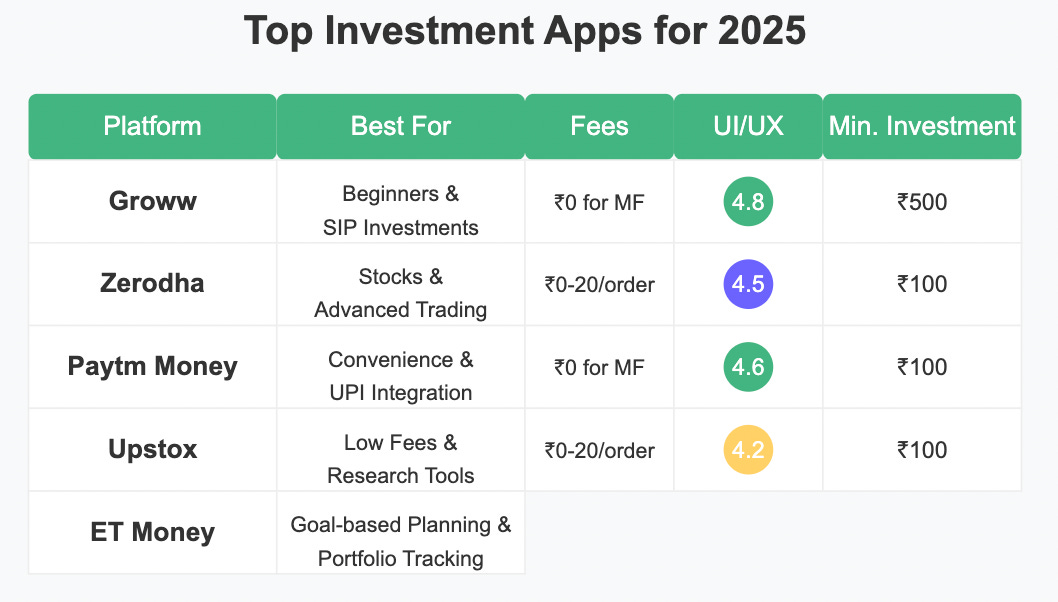
Tools to Get Started With in 2025