

GNG Electronics Stock Target 2026: Growth Outlook, Valuation & Multibagger Potential

INVESTMENT THESIS & SUMMARY
This company just went public six months ago and the market’s still figuring out what it’s worth. They’re India’s biggest laptop and desktop refurbisher, and they’re making serious money in a space most investors aren’t even paying attention to. The stock’s trading at a decent price considering they’re growing at 40% a year and printing cash. Think about it - everyone wants affordable tech, and this refurbisher’s the one giving it to them.
BUSINESS MODEL & OPERATIONS
So what do they actually do? Simple. They buy used laptops, desktops, tablets, and phones - mostly from big companies and government organizations - then fix them up and sell them as refurbished devices under the “Electronics Bazaar” brand. They’re not just slapping a new screen on and calling it done. We’re talking full testing, part replacement, cosmetic restoration, the works. These devices come with warranties too, so they’re basically as good as new but at half the price.
The money comes from three places. First, they sell directly to consumers through their retail stores and website. Second, they supply in bulk to smaller refurbishers and retailers who can’t source or refurbish at scale. Third, they’re selling globally - USA, Europe, UAE, Africa. India’s the main market, but international business is growing fast.
They’ve been expanding like crazy. Just in the last few months, they opened a new facility in UAE to handle more volume. Their total refurbishment capacity across India and UAE is now over 77,000 square feet. That’s massive for this business. They’re also sitting on cash from their IPO - raised ₹825 crores in July 2025 - which they’ve already used to wipe out most of their debt. Smart move.
Youtube Demo Link:
HISTORICAL FINANCIAL REVIEW
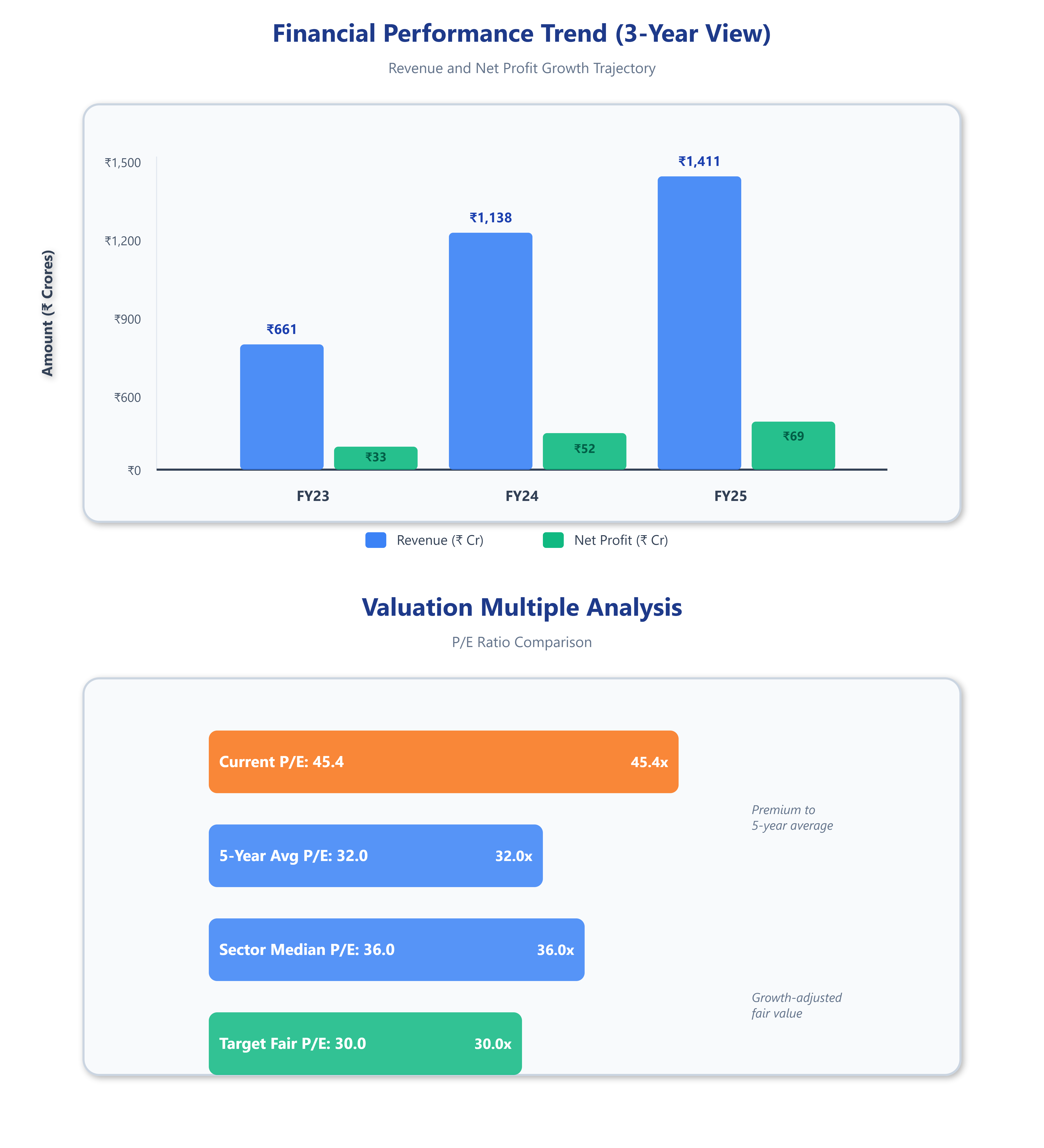
Let’s talk numbers. The company’s revenue grew at 40% per year over the last three years. That’s not a typo - forty percent. In FY23, they made ₹661 crores. By FY24, that jumped to ₹1,138 crores. FY25? ₹1,411 crores. They’re not just getting bigger - they’re getting way more profitable too.
Profit growth is even better. Five-year profit CAGR sits at 111%. In FY25, they posted net profit of ₹69 crores, up from ₹52 crores the year before. Earnings per share was ₹7.09 for FY25 on a post-IPO basis. The latest quarter (Q3 FY26 ending December 2025) pulled in ₹487 crores in revenue and ₹39 crores in profit. They’re tracking ahead of last year’s run rate.
The cash flow story’s interesting. They had negative operating cash flow until FY24, which is normal for a fast-growing business that’s buying inventory like mad. But in FY24, they flipped positive with ₹97 crores in operating cash. That tells you the business model’s working. They’re collecting money faster too - debtor days dropped from 37 days to just 17 days. Customers are paying quickly.
Management’s been clear about their plans. They paid off their India debt right after the IPO. Interest costs are dropping fast - from ₹10 crores a quarter to almost nothing now. That means more profit hits the bottom line going forward. They’re also spending on capacity expansion but doing it smart, not going crazy with capex.
FUNDAMENTAL VALUATION METRICS & INVESTMENT CALL
Current P/E ratio is around 45. That sounds high until you dig into it. The EPS figure got distorted by the IPO - they went from a tiny equity base to a much larger one, so the math’s a bit wonky. What matters more is that they’re growing earnings at 50% a year. If they can keep that up for even two or three more years, the P/E will compress fast.
Price-to-book is 5.3 times. They’re not a capital-intensive business, so book value doesn’t tell you much. The real assets here are their sourcing relationships, refurbishment know-how, and brand. Those don’t show up on a balance sheet.
ROE is the standout metric - 35% over the last three years. That’s exceptional. It means every rupee of shareholder money is generating 35 paise of profit annually. ROCE is 20%, which is also solid. These numbers tell you they’re running a tight ship and making smart use of capital.
No dividend yet, which is fine. They’re reinvesting everything into growth. At this stage, I’d rather see them build capacity and grab market share than pay out dividends.
So why buy? The valuation’s reasonable for a company growing this fast in a massive market. They’re the dominant player in India’s refurbished electronics space. And the market they’re serving - people who want quality tech at affordable prices - isn’t going anywhere. If anything, it’s growing as more consumers and businesses look for budget-friendly options.
LONG-TERM OUTLOOK & RISK ASSESSMENT
Looking out 5-10 years, I’d pencil in 15-20% annual returns if things go well. Maybe better if they execute on international expansion. The refurbished electronics market in India is still tiny compared to the US or Europe. As awareness grows and more people get comfortable buying refurbished, this company’s positioned to capture that growth.
Management’s talking about 25% revenue growth annually. They’ve got the capacity to deliver that. The IPO money gives them a clean balance sheet to invest in new facilities, hire more people, and enter new markets. They’re also getting into higher-margin products like servers and enterprise IT equipment, which should boost profitability.
Promoters still hold 79% of the company. That’s a double-edged sword. On one hand, they’re heavily invested in making this work. On the other, there’s not much free float, which can make the stock volatile. But they haven’t been selling shares aggressively, which is a good sign.
Now for the risks - and there are a few. First, sourcing. If they can’t get enough used devices at good prices, margins suffer. They depend on big enterprises refreshing their IT equipment regularly. If that slows down, supply gets tight. Second, competition. This is a low-barrier business. Anyone can start refurbishing laptops. They’ve got scale and brand now, but they’ll need to stay sharp. Third, technology shifts. If devices start lasting longer or prices of new devices drop sharply, demand for refurbished stuff could weaken.
There’s also execution risk around international expansion. UAE’s going well, but Europe and the US are different beasts - different regulations, different customer expectations. They’ll need to prove they can compete there.
On the positive side, India’s digital push is massive. More students need laptops for online learning. Small businesses want affordable IT setups. Government e-governance projects create demand. The refurbished market’s growing at double-digit rates globally, and they’re ahead of the curve.
One more thing - sustainability matters now. Companies want to meet ESG goals, and buying refurbished instead of new helps them do that. This trend’s just getting started and should be a long-term tailwind.
Overall? The setup’s solid. Fast-growing business, strong economics, clean balance sheet, big market opportunity. The stock’s not dirt cheap, but it’s not crazy expensive either for what you’re getting. Worth putting on the watchlist at minimum.
COMPANY NAME: GNG Electronics Limited (NSE: EBGNG | BSE: 544455)