

Global Diversification Strategy:A Long term Investment Strategic Imperative for Indian Investors

In today's interconnected financial ecosystem, limiting investments to domestic markets can restrict growth potential significantly. For Indian investors seeking sustainable wealth creation over decades, global diversification offers both protection and opportunity.
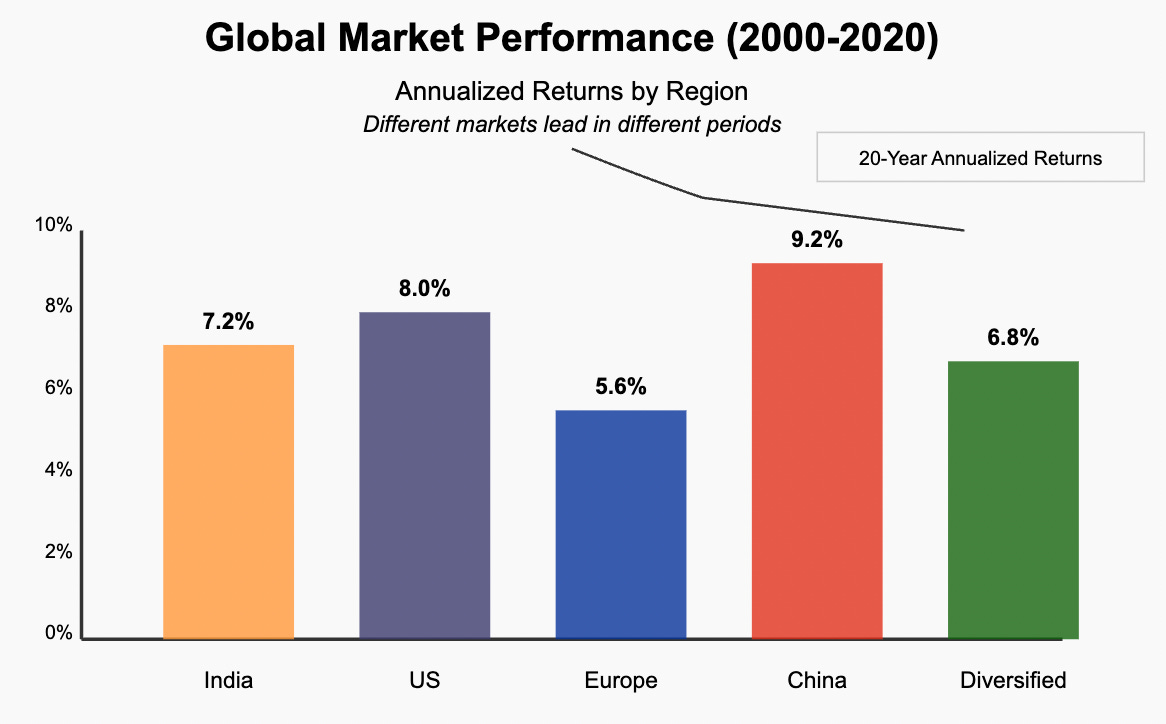
The Global Advantage
India represents just 3.5% of global GDP, meaning purely domestic investors miss over 96% of worldwide opportunities. Different economies operate on varying cycles—while India may face headwinds, markets across Asia, Europe, or the Americas might be thriving simultaneously.
Why Diversify Globally?
Mitigate Country-Specific Risk: Political developments, regulatory shifts, or economic downturns affecting India can be cushioned by investments in markets operating under different conditions.
Access Multiple Growth Engines: While emerging markets offer accelerated GDP growth, developed economies like the U.S. lead in innovation and technological advancement.
Currency Diversification: Holding assets denominated in multiple currencies can provide a natural hedge during periods of rupee depreciation.
Implementation Vehicles for Indian Investors
Mutual Funds & ETFs:
ICICI Prudential US Bluechip Fund (established U.S. companies)
Motilal Oswal NASDAQ 100 ETF (technology exposure)
Motilal Oswal S&P 500 Index Fund (broad U.S. market coverage)
Edelweiss Greater China Equity Fund (Chinese market exposure)
Nippon India ETF Hang Seng BeES (Hong Kong market access)
Global Index Options:
MSCI World Index funds (developed markets exposure)
MSCI ACWI funds (both developed and emerging markets)
MSCI Emerging Markets funds (growth economies)
Feeder Funds:
Franklin India Feeder Franklin US Opportunities Fund
DSP Global Innovation Fund of Fund
Strategic Portfolio Construction
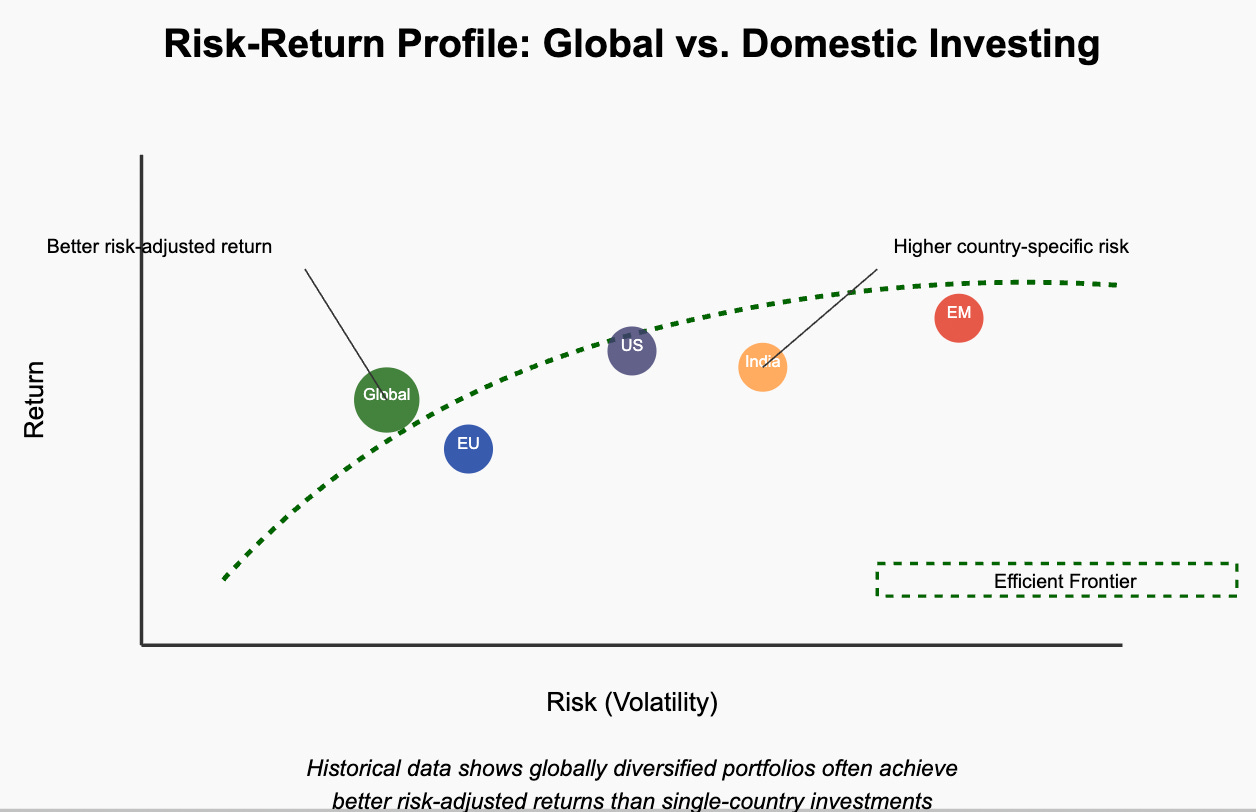
A balanced approach to global diversification might include:
5-10 Year Horizon: 20-30% international allocation, emphasizing stable developed markets
10-15 Year Horizon: 30-40% global exposure across both developed and emerging economies
15-20 Year Horizon: 40-50% international allocation with strategic sector positioning
20-25 Year Horizon: Up to 50% global diversification across multiple regions and sectors
Core Indian Stocks for Long-Term Portfolios
To complement global holdings, consider these quality Indian companies with strong international footprints:
Tata Consultancy Services (NSE: TCS): Global IT services leader deriving nearly half its revenues from North America with operations in over 46 countries.
Infosys (NSE: INFY): Generates approximately 61% of revenue from North America while operating in 56+ countries, with a robust digital services franchise.
Reliance Industries (NSE: RELI): Diversified conglomerate expanding from energy into retail and digital services with Jio Platforms, positioned strategically for multi-decade growth.
HDFC Bank (NSE: HDFCBANK): India's largest private sector bank with strong capitalization and consistent growth trajectory.
Asian Paints (NSE: ASIANPAINT): Market leader in decorative paints with expanding international presence across 16 countries.
Nestlé India (NSE: NESTLEIND): Consumer staples powerhouse with pricing strength and resilient demand throughout economic cycles.
Titan Company (NSE: TITAN): Dominant jewelry and lifestyle retailer with domestic and selective international distribution networks.
Challenges for Indian Investors
Despite clear benefits, obstacles include:
RBI's annual $250,000 limit under the Liberalized Remittance Scheme
Foreign exchange volatility impacts
Differential tax treatment on international investments
The Path Forward
The distinction between domestic and global markets continues to blur. For Indian investors planning for 5, 10, 15, 20, or even 25-year horizons, global diversification isn't merely an option—it's increasingly essential for building resilient portfolios designed to weather economic cycles while capturing worldwide growth opportunities.
Through disciplined rebalancing and maintaining a truly global perspective, investors can position themselves to participate in both India's promising trajectory and the broader international growth story unfolding across continents.